


![]() |
![]() |
|||||||||||
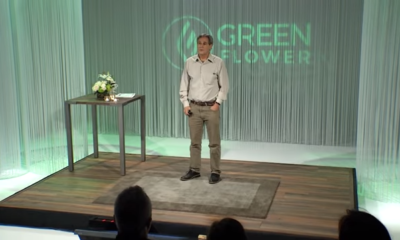
The NORML Conference's first panel discussion: "Grass roots to Grass tops" Featured Speakers: Martin Martinez, Vivian McPeak, Alison Chinn-Holcob, Esq., Roger Goodman Esq., Alan Hopper, Esq., and Seattle City Council President Nick Licata, Moderated by: Dominic Holden
Dominic Holden: We have a terrible drug war in this country that has negatively affected tens of thousands of people; at least hundreds of thousands of people every year. And the drug war reform movement is in fact a part of a greater movement still. A movement to end racism in this country. A movement to find equality for every single person in this country. And part of what this country was founded on, which was in fact a struggle for freedom. That we want to be more free, and we want to have a union that is more perfect. That is why we are here today, fighting to reform marijuana laws, and have a country that stops arresting marijuana smokers. So how do we stop arresting marijuana smokers? There's a saying many people have people have said: "We should think globally, and that we should act locally". What's that mean for pot? Or in this case, grass? We're saying today that it is grass roots to grass tops. Our job is to persuade a variety of different people. We must persuade our local progressive culture. Our own people. Our own choir we must teach how to sing. We must persuade our politicians, and our physicians, we must persuade our lawmakers and our bread bakers. We must persuade everyone. We have many different audiences. And for many different audiences, we must have many different messages. We must, in order to do that, have a lot of different work. We must have many different messengers, because different people will speak persuasively to different audiences. And so that is part of our strategy, we need grassroots organizing of those people who are affected. We need grass-top organizing. Grass tops are the institutional organizations. We need those people to speak to our lawmakers, and speak to our economic systems and to those who have the finances and influences to change these laws. And together, in fact, our efforts can be greater than the sum of the parts. We have the ability to together to change much more than people working separately. We actually, by communicating, have an even stronger movement. Seattle, we believe, is an exemplary model for this and we don't simply say that because we're from Seattle, but because we've been lucky and privileged to be a part of something that is very special. In Seattle we have the largest marijuana law reform gathering in the world − Seattle Hempfest − which draws in over a hundred and fifty thousand people a year. We have successful patient groups such as Lifevine, and the Green Cross that has been operating for years and taking care of their own, and people who desperately need help when they're ill. We've had marches, we've had rallies, we've had lawyers who've come forward to defend our patients and lawyers who will collaborate together to make sure that patients are defended. That the precedents are upheld, that our Medical Marijuana Law can remain intact. We have the Defender Associations of King County and Washington State working in collaboration not only to defend people who've been charged with drug crimes, but to forever end the war on drugs. We have the King County Bar Association that is working to end the war on drugs, and the ACLU of Washington. We're also lucky to have doctors, teachers, students, and local elected officials such as our City and County Council people and our State Senators. We even have a Marijuana Policy Review Panel, which is a division of our city council, which oversees all marijuana enforcement in the city of Seattle. So, to have a community that is so diverse, that it's able to work together. This community must strategize together, and we must also be able to communicate with each other, and resolve differences. And that is how a movement can stay cohesive. We believe it is not just a stroke of luck that brings this to Seattle, but also something that Seattle has actively sought to build. And we're here today because we believe that this can be built in communities across the United States, and as I speak here to the leaders of the marijuana law reform movement who work in their communities around the country. We believe that over the course of this panel, we can share some insights so that this type of activity, this type of collaboration can be achieved in all of our communities. I'm going to introduce our panel, and please hold your applause until the end. First we have Martin Martinez from Lifevine, next to him from Washington Physicians for Social Responsibility we have Sunil Aggarwol, next to him, we have the executive director of Seattle Hempfest, Mr. Vivian McPeak. We have the senior staff attorney for the ACLU's Drug Law Reform Project, Alan Hopper. We have director of the Marijuana Education Project, the ACLU's Alison Chinn-Holcomb. From the King County Bar Association's Drug Policy Project, Roger Goodman. And closest to me here we have the president of the Seattle City Council, Mr. Nick Licata. There are two people, who unfortunately it would be lovely to have on this panel with us today, but they are unable to be here. The first one is Andy Ko. Andy Ko founded the Drug Policy Reform Project for the ACLU of Washington in 2001. It was truly a blessing for us, because here we had someone who worked full time on marijuana law reform, was always there, and able to establish some of this community by holding our King County Drug Policy Reform coordinating group meetings. He was a liaison between grassroots groups and grass-tops groups amongst each other, and he has really worked to bring our movement together. He's not here at the conference today because he is attending the African American, or Students of Color Conference in Washington State, and leading a panel about drug policy. The second person who we would like to have with us today, his name was Robert Lunday. Robert was a model of good communication. He believed in a broad base strategy. He would work with the newest hemp activists, and he would work with people who were working within the movement for years. He would work with politicians to bring them into the fold, funders and lawmakers, he would work with them, starting initiative, new organizations, and he also founded hemp.net, which brought the marijuana reform movement in Seattle into the modern age. And suddenly, we're communicating and collaborating from our own homes, like we've never done before. In fact, Robert was sharing a room with me for my first conference that I attended for NORML in 2000, I didn't know how to tie a tie, but I brought one, and I asked "Robert, can you help me tie this on?" "No problem". He did, and I'm wearing it today. Sadly on June 9th, of 2002, Robert Lunday passed away due to unexpected, but natural causes. But two days before, on June 7th of 2002, and e-mail exchange between Andy Ko and Robert Lunday was recorded here: Andy Ko wrote: "we will never get anywhere with a bunch of dumb old Ko's". Robert wrote: "we'd never get anywhere with a bunch of any one of us. Fortunately, we have a lot of smart and talented individuals, each doing righteous work in their own way. And yes, that's why we're going to win". So with Robert's spirit of collaboration we're here today. Fourteen months after this, Robert wasn't there to see it, but Initiative 75 had passed, making marijuana possession one of the lowest law enforcement priorities. The Seattle Hempfest continued to grow, and is the largest marijuana reform event in the nation. We've continued with our movement, for criminal justice reform, to end the drug war, to fight against racism, to fight for equality, to fight for freedom, and ultimately for our future. Because we are going to take the first steps in our own communities for our own futures. We're going to do it by stopping the arrest of responsible marijuana smokers in our own communities. They say that politics is a little bit like the opposite of Reaganomics. Reaganomics said that "yes all the money was going to trickle down". Well, in politics, the influence trickles up. It begins with the people who are affected most by our terrible laws and the circumstances that they're in; people who have to fight for their own justice. And marijuana smokers have had to do that quite a bit. For no one is this more important than those people whose lives are on the line − medical marijuana patients. So we'll start where our movement begins − with people who need marijuana in order just to survive, and have a good quality of life. Our first panelist has been fighting for medical marijuana since his first arrest in 1996, and it was his own doctor who filed Washington's Medical Use of Marijuana Act in 1998. Martin has a book out − "The New Prescription - Marijuana as Medicine" that was published by Ed Rosenthal in 2000. He is Washington State's only court appointed expert witness on the use and cultivation of medical marijuana, and he will release a documentary, "The Miracles of Marijuana", as well as the establishment of a new non-profit patient rights organization called the Washington League Of Patients. Please join me in welcoming to the stage, Mr. Martin Martinez. Martin Martinez: Thank you. Thank you very much. I have a disabled voice from a motorcycle crash, and it's a little difficult to understand me sometimes. I'll try to do my best − please bear with me. I'm one of the people. I'm one of the grassroots which has grown up, as it were. And we all represent different factions of a very broad spectrum. It's true that San Francisco of course is known as the center of medical marijuana and marijuana legalization in this country. Seattle is . . . I don't want to say number two, because that would put it in hierarchy. Seattle is different. Seattle is unique. Seattle is very rich in alternative cultures of all sorts. But of course we are here trying to reach middle-of-the-road mainstream America and I wanted to mention something about what Allen St. Pierre was speaking about with the immorality − marijuana is not immoral, that's a social consideration, of course. That's prejudice, handed down from our great government. Science leads society in the Western world, and of course it's the science behind medical marijuana which has created the medical marijuana movement. Usually opponents of medical marijuana and legalization love to throw stones and say that there's a bunch of hippies out there trying to turn you on to medical marijuana. The truth is very far from that. The fact is that doctors write recommendations for marijuana patients in many states in this country. They put their reputations and their licenses on the line by doing so. And they do so, not politically of course, but medically. They do it because marijuana is good medicine. And there is no prejudicial bigotry that can overcome these facts. I was fortunate to speak before the Washington State Senate last February, and it was coincidentally on Martin Luther King Day. And I felt some of the Senators there perhaps were a little shocked that I invoked the memory of Martin Luther King at that time, but the fact is I represent a small share of a much broader, larger minority. Of course as Allen was pointing out, people who use marijuana for any reason of course, even though there are millions of us, it is a small minority compared to numbers on CNN, I guess − and that influences our politics. So we need to uphold the truth, and we need to play our cards, play the truth. The truth is, we are one of the worst oppressed minorities I can imagine. People who use marijuana are criminals − we are subject to the worst sort of treatment in society. It is an honor to be with you today, speaking on this very esteemed panel. Thank you, NORML, for providing this opportunity to discuss the State of Marijuana in Washington. I'm here to talk about medical marijuana. But the fact is, once upon a time, I was a pothead too. In fact, I smoked more marijuana than anyone else I knew, when I was younger. There were many years I smoked marijuana at least once a day every day. Then one dark night, a car slammed into my motorcycle at 60 miles per hour, and my whole life changed. I was no longer young and healthy. I was old and broken and I was no longer a recreational drug user. Marijuana patients are often reluctant to admit they used marijuana before they were sick, because opponents so often label us as legalizers. To me it seems quite reasonable that people with prior experience with marijuana would be more likely to use it as medicine if they felt they needed it. Regardless, people must realize there is a huge difference between severe medical cases and typical recreational use. Washington State Law is different than here in California. Patients on the list there are all terminal or intractable by definition. Those who use medical marijuana often develop a huge tolerance, and they require far greater amounts than most people imagine. I myself use almost ten times the amount I smoked when I was a pothead twenty years ago. And it's much stronger, it's true. About ten years ago a small army of police officers broke down my door and ripped my life apart. I spent two years fighting for the right to possess marijuana as a medical necessity. During that time, California passed Proposition 215, and soon after that, my doctor filed the Medical Use of Marijuana Act in Washington. And when our initiative passed by almost a 2 to 1 margin, I thought it would prevent other people from suffering the same misery that I had gone through in my legal battle. I was a little naïve. About a year after the initiative passed, I got a call from my attorney. He was calling to ask me for a favor for a change. A man named Bangs was facing a stiff sentence, because the sheriff found a few scruffy marijuana plants in his yard. Mr. Bangs was a patient, but he was found guilty on a technicality. It was my job to help reduce his sentence by explaining how marijuana patients tend to use more medicine than most recreational users. The judge was very intrigued by my testimony, clearly he had no other reliable source of information on the subject. And he was curious. Mr. Bangs received a light sentence. But then there was another case. And another. And other attorneys began calling, and I was compelled to continue defending the right to possess marijuana for far too long. I've met with many police officers and prosecutors. I've provided a factual analysis and written testimony in criminal court. I've testified before the State Senate, and the House in Washington. I have testified before the Washington State Bar Association, after some legal wrangling, and some misunderstandings have been achieved. in some cases, but these cases still keep coming. Even this last month, there's a new case that I'm involved in. I've spent hours and hours pouring over police reports and sifting through the remains of marijuana patients' gardens on the floor of a police evidence room, in the basement of the courthouse. I've been deposed in more than a dozen cases, and I've been consulted on many more. It has been rewarding, when my testimony has helped uphold patient rights. But the fact is I'm not an attorney, and this is not the type of work I enjoy. I am personally very sick, by the way. And I am very weary of these intense arguments over relatively small medical gardens. Washington patients are required to provide valid documentation on demand. But all too often the patient may be accused of forgery. And then he's forced to spend hours in police custody. Medical marijuana gardens are often destroyed regardless of documentation. In some counties, police officers actually tell people that there is no medical marijuana law . . . that it has been revoked by the legislature, which is a complete fabrication. Great legislative support was rallied again this year by our hero, Senator Jeanne Kohl-Welles, but our issue was marginalized way off the page once again this year. There has been some great progress in Washington, yes, but I am sad to say that in some cases and in some ways not much has changed since my first arrest back in 1996. And there are many reasons for this, locally, of course, it's the law enforcement that is subject to the individuals in charge. But remember of course that we're all here because all of our state laws and all of our community laws are ultimately driven by the DEA's heavy hand. I personally have had my house searched; I've had police officers at the door of my office; I was under surveillance for many months; just this last year I had to move my office because I couldn't stand looking at the police every day. It's a big waste of money for everybody concerned. Many of the legal cases I refer to are posted on my website, CannabisMD.org. I put a lot into that. There's a huge amount of information. I have written a book, "The New Prescription − Marijuana as Medicine", it includes references to a majority of important medical marijuana science that was published previous to the year 2000. There's been an awful lot since, and the website is getting very top-heavy. The grass roots are growing, and bringing with them a great deal of information, a great wealth of knowledge; and people should become more educated on medical marijuana, because it does affect us all. Dennis Peron, we all may know, was quoted in Time Magazine under his picture it said, "All use is medical use". And we may remember that his club was shut down about thirty days after that. I'm not here to say that. In my experience, I'm severely ill, and I'm trying to make, show, and clearly convey the distinction between medical and recreational uses. It's absolutely necessary. The group is now just called Lifevine, and I'm going to speak more about that tomorrow, on the panel about dispensaries. Here I'm just trying to speak a little bit about the developments that I've been experiencing in Seattle. But the patients in Lifevine and Green Cross and other groups and other patients that are not affiliated with groups, many of them are very severely ill. I personally have lost over twenty patients in the last five years from my group, so this is not about a party. But the medical use is real, and it is real for all people that marijuana has great benefits, which are extolled and will be extolled during the course of these three days. I look forward to hearing more about it. I personally have my own story to say, I've written this book and I'm going to reissue a better edition in the next year or two. And now as Dominic said I also have a DVD available, which is called "The Miracles of Marijuana", and it's a series. I only have the first issue out, as of yet. But it discusses the serious side of marijuana and the state of marijuana in Washington today. And the last thing I wanted to share, which is very recent, a number of attorneys have helped me to start a group called the Washington League Of Patients. Up until now, I've been supporting, and have been supported by, a small group of medical marijuana patients who are very supportive of this issue as a matter of survival. But there's too much work to do. There is not, I'm afraid, the huge swell of support in Seattle. The issue is not out there − there is no information available. There is Hemp.net. That's a great benefit, and I'm very happy to be a part of that, with CannabisMD.org, and there is a great nexus of supporters, who are going to tell you much different stories I'm sure than myself. My own experience is somebody trying to survive, patients who need the medicine, and they need to be left free, to enjoy or survive what is the remainder of their lives. Any one of us can fall severely ill, so it is really a benefit to understand the science behind medical marijuana, and to realize that just for instance there are hundreds of millions of people who suffer from arthritis in this country for instance, who would benefit from cannabis' ability to reduce inflammation, but there are no "infomercials" out there discussing the great benefits of cannabis. So it is up to us to share this information and to help educate the fifty percent people who don't understand, that Allen St. Pierre was mentioning. I'll let the other speakers get on with their discussions. I have a table in the back room if people are interested in my material and discussing WALOP, the Washington League Of Patients, a patient driven, patient rights support organization that could really use some help. I'll be here all three days. Thank you very much for listening. Dominic Holden: Excellent, thank you Martin. You know, it's a real pleasure to introduce the next panelist because typically they're the person who introduces me. He is an M.C., and a fantastic orator, it's always a privilege to hear him speak. He's really helped develop the movement in Seattle. He started working on marijuana law reform with the Seattle Hempfest in 1991, and if you look at the history of marijuana law reform since then, really everything in Seattle has come after that. There were some things in the seventies, true. But this person, if you want to talk about grass roots, this is the man who not only tilled but fertilized the soil. So, you know, one of the things we've been talking about is the importance of communication, and communication of course requires a community. And to use a statement that was brought up by this next panelist to me years ago, community is in fact formed out of two other words: commune and unity. Well, what better way to form community, and to form in unity, than to bring everyone together for a marijuana law reform rally, where people can exchange ideas, and we actually have a sense of just how much power we have. Hempfest has turned into somewhat of a litmus test of just how much potency our movement has. With over 150,000 people attending, we have the numbers, we have the power, it's not a matter of if we're going to find change, it's a matter of when. This man has been a part of Hempfest since its inception in '91, and has been the executive director since 1998. He's been a peace and social justice activist in the Seattle area for twenty years, and director of the Washington State Chapter of NORML. Vivian is a medical marijuana patient, he lives in Seattle with his two children and Wonderdog Nugget. He operates the Seattle Peace Heathens Crisis Resource Directory. And he wants you to know that his left ear is slightly larger than his right ear, but both his left ear and he are fine with that. Please welcome to the stage, Mr. Vivian McPeak. Vivian McPeak: Thank you Dom for that generous introduction. You know, I'm honored to follow somebody whom I love and admire so much, Martin Martinez, whose work, I think, is infinitely more important than the majority of us, because he is dealing with the people who really don't have time for legalization to happen. You know, pot smokers are "immoral". And I'll bet that fifty percent of the people that say that probably think that the George Bush Administration is moral. You know, something else. I have a prepared statement because, and this is the truth, I get very nervous speaking in less than about twenty or thirty thousand people. And I know that sounds weird but it's the truth. It's an honor to be here amongst such distinguished colleagues. I barely feel qualified to be up here, considering the groundbreaking work and advocacy for NORML that so many of you in this room have been actualizing. And I doubt that I have much to offer you that you don't already know, but I do have a unique perspective, and it's that which I hope to share today. Before I begin I want to say that I'm a little self-conscious being in San Francisco, and speaking about the Pacific Northwest movement, because groups like ASA and California NORML and all the other incredible groups have been such trailblazers in normalizing medical marijuana, and marijuana smoking in general to a degree that I don't think has ever happened. So I just want to give kudos to realize I'm amongst some serious peers here. So I really want to give respect to the San Francisco movement and the California movement in general. I'll be using Seattle Hempfest a lot in my presentation, both because it's a primary source of my experience, because I believe it serves as a good example of how far grassroots activism can go, and also some of the indications of the grassroots model. When harvesting a crop of marijuana, which I'm sure few of us here have had any personal experience in, it's not the roots that we save and savor, it's the tops. Grass tops is vital to anything, you know, all grassroots can really do is create an environment where the grass tops can actually actualize legalization, and effect legalization. I just want to say that many of us understand that. First I want to talk about NORML. My parents often stated that they thought that there would never be anything normal about me. And I really want to thank this organization for the opportunity to prove them wrong. This is as normal as it gets. Being a young man of 47 years of age, I remember back when NORML was in my mind a mystical crusader, a bigger than life organization that I would have been happy just to sweep the floors or empty the trash for as a young man. In fact I'll be around when the panel is over if you need some help tidying up and stuff. Now, over thirty years later, I've had the opportunity to experience NORML as a flesh and bones institution comprised of politically, economically and culturally diverse cross-section of everyday supporters, activists, academics professionals, policy wonks, even maybe a couple of stoners that got in undetected, under the radar. It's this very diverse makeup of the movement that I want to touch on for a moment today. I read not long ago that another pro-reform organization which has been very successful had decided early on during their formation that there would not be any ponytails and scraggly beards in their organization. This may be a smart strategy for their specific goals and purposes, it's not for me to say. There's no single strategy or protocol for success, but rather a woven fabric of ideas and approaches − a mosaic that forms a picture of reform. But I believe that our strength and our future lies in our diversity, our tolerance of each other, and ultimately in our sense of community. I say that because I believe that everybody has a role and plays a part in enacting massive social change, and a key to success is knowing what the appropriate role for oneself is considering one's resources, experiences, expertise, and even knowing what one's personal experiences offers. For example with my dreadlocks, my increasingly Dr. Andrew Weil-ish looking beard, my piercings and my not visible tattoos, I am not the guy to be appearing on the six-o'clock news, and I know it. Most viewers will automatically associate my personal appearance with the images that the media uses to portray someone who has an appearance such as mine. And you know in fact I represent what many consider to be the Achilles heel of the marijuana movement. Legitimately. And I'm talking about the relentless unceasing association with the 1960's counterculture that is used to marginalize, relegate and discredit the great individual collective works toward reform that we all participate in. Now, I made a conscious decision a long while ago not to cut my hair and shave for the movement. I feel that in my own way I do my own part, and that media presentations are better left for someone else, such as the ninety-five percent of the population that look more mainstream. Some will consider my decision as irresponsible and self-indulgent, and there's no doubt that my appearance is a liability in certain circles. Some will never be able to get past my appearance to consider the potential wisdom, merit, and value of my opinions. But what I've learned is what may be a liability in one circle, can be an asset if used strategically in a different social setting − providing that which the kids call "street cred". The reason that I may be focusing on my own appearance is to make the point that we cannot afford to deliberately, or even accidentally alienate anyone who could be a potential supporter of our movement. That's one of the reasons I'm so proud to be a NORML member − because NORML is not only inclusive and embraces diversity, but because NORML is very accessible to the average citizen. We need to build community, because community gives us staying power. Community gives us access into neighborhoods and living rooms during the twenty-three hours a day that the evening news is not on television. Grassroots activism to me means community based activism, whether it is precinct by precinct politicking, door to door fundraising and educational outreach, or producing events to raise money and educate, it is the awareness of the political and economic power that can be harnessed by the grassroots community based activism that I believe provides any movement longevity, fresh bodies with fresh ideas, and even more importantly the "street cred" an organization needs to effect changes from a bottom up, rather than a top-down fashion. I feel that both of these approaches to reform are necessary to someday meet in the middle and achieve victory. Our fearless leaders in congress appear that they have pressing priorities other than marijuana decriminalization or outright legalization. In the same way that a dishwasher is vital to the operation and function of a restaurant, I feel that grassroots activists are just as essential to a political or social justice movement as the suit and tie policy wonk institution. What the grassroots activists may lack in experience or training is often compensated by a lack of cynicism and the presence of a naïve optimism. How many times have you heard a seasoned activist tell a newbie "That won't work, we tried that". If you told somebody back in 1991 that you were going to build a pot-rally from the ground up with zero dollars, place it in one of downtown Seattle's most beautiful waterfront parks, staff it with one thousand volunteers, invite bands and speakers to come from all over to participate for free, and that the police would just stand by, smile, and look the other way, while 100,000 plus people got baked in the sunshine, just about anybody would have told you that it was virtually impossible. But we never heard any of that. So we didn't know it was impossible. Therefore we were able to do it almost solely by invoking the power of community. Well, Seattle Hempfest does not have an intentional community, we have something that I believe is much easier to maintain, and possibly just as powerful. Seattle Hempfest has a community of intention. In an effort to foster strength, loyalty and morale in our organization, we've instituted support networks that we believe enhance the community vibration of our group. The Hempfest Organization is extremely diverse. With people ranging from people who are disabled and homeless, to professionals who own businesses or even own more than one home. For the economically disadvantaged among our hundred person core group we created a project called "Operation Munchies". The way "Operation Munchies" works it that the more financially stable members of our core group purchase gift cards from local supermarkets, usually in twenty-five or fifty dollar increments that are available upon request by any core member as long as the funds are there. In the last year I estimate that over one thousand dollars has been distributed in this fashion, ensuring that the most humble among us can participate with the knowledge that as long as they belong to our group, are loyal and are honest, they will not starve. And I say starve because for grassroots activists, that's a reality. It's really hard to make a living, and work full time in activism. Obviously we have implemented safety valves that prevent any single member from abusing this nicety. And the result is an understanding of our core members how valuable that they are to us. Real authentic community does not let members go hungry or homeless. A dear thirty-four year old member of our core group, speaker and band specialist James Mathison, was recently diagnosed with non-small-cell lung cancer metastasized. He's been given less than fifteen percent chance of living more than five years. We immediately created a two hour prayer circle that has met weekly for two months to offer James the only real support we can think of, that we can all participate in. Naturally, not everybody feels comfortable taking part in such metaphysical activities, but you can be sure that everyone understands just how much we value James; how important he is to us as a human being and a member of our organization. During Hempfest, Speakers and bands can expect to be treated to the best hospitality that we can or cannot afford. The same can be said for our 100,000 strong league of volunteer staff. We could have easily got by doing nothing for our participants and staff, as we did in the first several years of Hempfest. But our desire to cultivate community is as important to us and is as valuable to us as financial resources are. Now I'm going to ask you to forget that as I continue on to Hempfest's financial crisis. Being completely rained out in 2004, having had the worst year for contributions in recent memory in 2005, having two bounced checks from a sponsor and vendor last year to the tune of six-thousand dollars, and created legal fees in our struggle to survive a huge development project that's taking place right now, in Seattle, at the mouth of one of the parks that Hempfest takes up has all come up to Hempfest coming disastrously short last year to the tune of twenty four thousand dollars the first time we have ever come up short more than maybe a thousand, two-thousand dollars. Such debt and bad luck would certainly destroy many events, and you may be thinking that our zeal to foster community may have played a role in our finances today. This might be true to some extent, but I want to point out that it works both ways. Hempfest has community. Two married members of our core group just recently re-financed their property and paid off every dime of Hempfest's twenty four thousand dollar debt − despite the fact that James, who's fighting cancer, is their son. We foster community. And we work very hard to create preserve and honor it sufficiently. Without that keen sense of community, Hempfest as it stands today would be indeed impossible. I want to reiterate my contention that grassroots community − grassroots activism − to me means community activism. You can imagine the pressure that I feel to raise the funds to pay them back and support them as we've all supported Hempfest beyond the call of duty. So this would be a great time to break out your checkbook . . . wrong speech. The load has brought us closer, and Hempfest will make it, we've concentrated for fifteen years on creating this organization, and we haven't been the best fundraiser in the world, and we're learning fast, let me tell you. and I just want to reach out to, there's many great fund raisers in this community right now, and I want to say that we're ready to learn, so anything you can do to help us would be great. I'm not asking for your money, I know better than to ask activists for their money. That's something that we don't do. We don't ask our core groups for money either. I want to impart to you that all of Hempfest's efforts to create community has not stopped with the Hempfest core group, Over the years Hempfest in sear have approach to aggressive diplomacy, as much honesty as is practical within the framework of such an environment, and the general goodwill to all has been in partial responsible for forging extremely unusually good and supportive relationships, with almost every city department head that we've had the opportunity to interact with over time. We recently met with a police commander who assisted us in evaluating our emergency evacuation plans, which Dominic prepared, and which that officer could not find any thing wrong with or offer any improvements on. I also want to point out that the same officer was quoted in international media coverage, after last year's Hempfest, that made it all the way to Turkey and Taiwan, and all over the place saying good things about us and I was very thankful for that. In addition, we're scheduled to receive training from the fire marshal's office in Seattle to better assist us in responding to emergency situations within our event, and in coordinating better with emergency responders in the event of an emergency, or serious injury, we've just received permission from the Port of Seattle to utilize their parking lot for vendor and delivery staging, vetting and processing. We are in negotiations with Pier 70 management over wrapping attendees around their complex, in an effort to negate any undesirable impact our attendees may have on businesses that exist along the side there. We feel that such relationships between a pot rally and city and business representatives has been previously unheard of. At times we felt as if we were in a cross between the Twilight Zone and Mission Impossible, and our diligence at creating community I believe is responsible for the mutual respect and goodwill that has made such a Herculean effort, as a Seattle Hempfest, an all volunteer organization, possible. And being in Seattle also plays a huge role in Hempfest viability, and I'm talking about the grass tops people whom you will be hearing some of today. I also want to point out that Seattle's progressive leadership and their respect for the Constitution of the United States, free speech and freedom of assembly has also made Hempfest very achievable, and I want to specifically thank Nick Licata, possibly the greatest City Council ally that any group could ever have. Thank you, Nick. You know, the grass tops folks have been very instrumental in giving Hempfest something that I believe is the opposite of "street cred", and I guess that's "office cred", or something, I don't know what you'd call that, but it works both ways, you know, and having such distinguished people come and speak on our stage at a marijuana rally has really shown the media, the public and our attendees "hey, this thing is really big", and we're connected to the top from the bottom, like any healthy plant stalk is. Someone once asked me "how grass are your roots, Vivian?" And I wasn't dying my hair so I assume they were talking about activism. Personally, I'm as grassroots as it gets, I think, all my years in the movement − I am not a professional activist at all. I've never been one, I've never been paid to do any activism, I'm an amateur, and any potential employers in the audience please understand I haven't ruled that out. You know, I'd love to have more teeth in my head so I can chew more food and stuff like that, but that's the sacrifice of a volunteer activist, a good example of the downside of volunteerism, and a demonstration how essential it is for the movement to have well educated, well funded participants, and institutions who can work the change from the top down, as the rest of us work from the ground up. We are all part of this community, we are all essential. The minute we forget that I believe we have doomed ourselves to failure. If we allow ourselves to be divided, we will be conquered. A plant's health is dependent upon healthy cells, from the root bottom to the very top of the plant. The pot movement in Seattle is in slightly more warm and fuzzy and less competitive than some of those in other municipalities. This has been a relative unity within our community and I say relative because not everybody feels as unified as some of us do. But in general there's little infighting and a very small degree of an unhealthy brand of competition. This movement cannot afford to be divided between the medical marijuana advocates, the industrial hemp contingent, and the recreational freedom advocates. We cannot afford to let competition for funding or media positioning become a wedge that divides us and pits us against each other. That's never happened in this movement, has it? This movement cannot afford to sacrifice the countercultural elements which clearly founded the marijuana movement, on the altar of expediency and broad message appeal. We may be able to win that way, but in the process we will have sacrificed the soul of the movement. Imagine if you will an environment where you can smoke pot all you like as long as you're willing to conform to somebody else's standards of appearance and lifestyle, religion or sexual persuasion. This movement is as you all know very well, about personal freedom, liberty of lifestyle, choosing for oneself that which one does in the privacy of one's home, or the sanctity of one's own body, bloodstream and bladder. We will never win without broad mainstream support and acceptance. But I believe that we must be mindful to carefully honor the cultural diversity and differences as we mainstream our message. After saying all that, I want to play devil's advocate for a minute about grassroots activism. And I think this may be touched on a little bit more by some of our other speakers. Grassroots activism I believe is essential, you know, it's a two way street. The people that are working from the top down, the grass tops are working very hard at undoing these perceptions that the whole marijuana culture and images of angry people in the streets with their fists raised on the front page of the paper doesn't really help them, I think. And well meaning, irate, outrageous citizen activists who challenge officials now attend legislative hearings and stuff, in an aggressive, negative tone, an adversarial tone really hurts the movement, and because of my appearance I don't attend a whole lot of legislative hearings. I'm serious, I leave that up to other people. I know that in some areas my appearance is a liability. And you know, I think everybody should have the right, and I demand the right to look, live, the way that I want to. But I also know that there's a role out there that I play in the movement, and there's a time that I need to step back and allow other people that have the proper image, and I'm going to use an example for that. Dominic is working with the ACLU right now, and is a former director for Seattle Hempfest, and I specifically asked Dominic to be our media spokesperson, to stay on with Hempfest in that capacity. I did that for two reasons. First of all, he's the best person that I know that can pull the job off because he's so articulate, and he phrases his words so well, and he has a great over view and small view, but also Dominic has the a more youthful appearance, he's not as young as he looks, by the way, just wanted to point that out. He's got good genes. He has the appearance of thirty years of age, he has what we need to put forward to the public and I understand that. I think that it's very important that all the grassroots activists, of course which many of them look very mainstream, and I think that all of us need to understand that. I wanted to mention something very short that I wanted to talk about, let me just shorten it up . . . I think that the cannabis policy reform movement has a tremendous responsibility to co-opt the only legitimate argument our opposition has, which is youth, use, and abuse. And if we can do that, we can negate them and give them absolutely no legitimacy whatsoever. I also believe that not only do we have a great opportunity because we have the "street cred" that it might take to actually reach people, "Are we not fiery enough at Hempfest? Come on," are we selling out? But also we have a tremendous responsibility to reach out and to cover that base. Because I love to smoke marijuana, I smoke a lot of marijuana. But the risks . . . you know smoking is not good for the lungs, but genetic predisposition to abuse has not changed at all, on the contrary, the pressures and responsibilities of every day life in America has increased, and also the age of experimentation has decreased as well, so I just think it's a vital component that we adopt a national strategy and policy of advancing proactively marijuana abuse prevention, education, and I think we need to start early on, with children before they even have the chance to be presented with marijuana and drugs. Not the most popular concept in the pot movement, but that's okay. And finally in closing, I use Seattle Hempfest literally in my presentation because that's where the majority of my experience lies. Hempfest is an amazing phenomenon, to me. Every year Hempfest is, on the part of our group, literally an act of faith, and I'm proud of what Hempfest has achieved. But I'm also aware of its limitations and its shortcomings, which are partially the result of our leadership, my leadership. I receive a lot of praise and adulation for the success of Hempfest to date − but I must confess that there are hundreds of people who share every bit of responsibility for everything good that Hempfest has achieved. I also want to state that although I know that Hempfest is a good thing for the movement in general, and as the Washington State Chapter of NORML, I feel that we are woefully inadequate in enlisting new NORML memberships and for advocating for NORML in general. We have been, but it's something that we are really going to change this year, and beef up. Just bordering our state is the home of what appears to me to be one of the most terrifically effective State Chapters, Oregon NORML, and I want to give kudos to Madeline Martinez... Have you seen their website? Wow! And we intend to reach out for guidance to better improve our understanding of a state chapter of the original authentic internationally renowned cannabis policy reform. And I want to say lastly that Allen and Keith have been tremendously supportive and tolerant in this fashion and you know when I call either one of them up in Washington DC they answer the phone, they're right there, they take as much time as they can possibly take out. I think Allen may have some Vulcan in him or something because he was rambling off all these concepts to me so fast, I was taking notes, and later I looked at my notes, I could hardly process all this stuff. You have incredible leadership within this organization, it's amazing, it's astounding and I really want to again reiterate the accessibility, the tolerance, the diversity, the openness that NORML offers, that some other very reputable organizations haven't yet achieved. Thank you very much, I'm very proud to be at a table with such people, I don't think I belong at this table, but I'm very thankful to be here, thank you. Dominic Holden: Thank you Vivian. I went to a Drug Policy Reform Coordinating Group meeting here in King County, and this guy showed up. Someone I'd never seen before. And everything he said was so on point, he was so smart. And he just seemed to just come out of the ether. People were like "Wow! Who is this guy?" It wasn't until I had read through a little of what he's doing and what he's done that it started to make sense. He's a fourth year M.D. and Ph.D. at the University of Washington's School of Medicine in Seattle, and he's an active member of Physician's for Social Responsibility: He's a member of their board. Please welcome Sunil Aggarwal. Sunil Aggarwal: Thank you. I'm actually a student, I want to correct Dominic. It's really an honor to be here, to be a member of this panel, thank you for inviting me. You all are my inspiration and my teachers, many of the people here have really made it possible to speak. It gives me a sense of safety, and the folks in Seattle for sure have created an environment of safety and acceptability around marijuana issues. What I'm going to talk to you a little about is something that a wise person once said: "Let your life be your argument". And so I'm going to tell you a little bit about what I'm doing and how I got there, and the people along the way who've helped to show me the wisdom. So originally I'm an Okie from Muskogee, born and raised. As you all might remember that's the famous Merle Haggard song, which was the reaction to the sixties counter culture that Vivian was talking about Where I grew up marijuana was a bad word, I mean a very, very bad word; a stigma through and through. It wasn.t until many years after I left Muskogee, when I came to the University of California − Berkeley, across the bay here, that I learned what a complete fabrication and lie that had all been what was taught to me about that. So I have to give props to the bay area, right away, for teaching this "Okie from Muskogee" that marijuana is not this horrible, horrible thing, which is what we were taught in school. We sang that song in school too. We loved... we're so proud of it. So it was actually at a students for sensible drug policy meeting at UC Berkeley, 2001, "What D.A.R.E. Didn't Teach You", was put on by Scarlet Swidderlow when she was a student there, she's now nationally involved in Students for Sensible Drug Policy, where I started to realize "Oh, wow! There's a lot here!" I had no idea. I had met Fred Gardner then too. Fred Gardner is a former editor, advisory board member of Scientific American and he writes O'Shaughnessy's, which is the Journal for the Clinical Cannabis physician's group here in California, and he told me... I was on my was going to med-school then and he was like "Sunil, you know, you're just going to have to go there and tell them, tell your professors to put this in the curriculum and tell them this is medicine, this is real." And so that's really where it all started, it all started here. In Seattle, I play a couple of roles, one as a medical student, as a health care worker in training, another role as a scholar, a student, working on my PhD in the geography department, and a third role as an activist in the community with the Washington Physicians for Social Responsibility for the last couple of years. We are an organization that really wants to help create a healthy, peaceful, and sustainable world. It's very simple. We believe in nuclear non-proliferation, and we believe in cleaning up toxins from our environment − the right kind of chemicals. We believe in promoting non-violent solutions and a non-violent energy policy is what our major focus is these days. Since I've been the president of the organization for the last two years, we've signed on to Roger Goodman's King County Bar Association's Drug Policy Projects, we are a member of the "grass tops" groups that want to see change at the Washington State Policy Level. Just as alcohol prohibition fell before with states pulling out of this, that's what Roger Goodman's group is trying to recognize, the inherent amount of violence and problems to our youth that are caused by these policies and so I'm really happy to say that we're a part of that. So I speak on that note. As a medical student, I have the great honor of meeting people, working with doctors in Seattle, like Dr. Gregory Carter, who's a professor of physical rehabilitation medicine in Seattle at the University of Washington. He has totally been a great mentor for me and led the way. He has written a paper, "Rational Guidelines for Dosing", which is used in court cases to help judges and lawyers understand exactly how cannabis can be used medicinally. I've had opportunities to see patients with him in the clinic, and to actually see firsthand exactly how a cannabis recommendation happens, how it helps patients with their quality of life . . . I mean it's remarkable. So I totally stand on the backs of great people like Dr. Carter. As a student, I should say that if there are any students out there listening on the radios, they should know that anytime you have an opportunity to do a research topic or pick a paper topic to write on, this is a great way to raise the issue, by talking about a cannabis related issue, in your work. That's something that I've tried to do with my PhD, is to dig deeply into cannabis and cannabis related issues. and start to look at it as a part of our environment. I think this is, my work with psr, I've learned you can actually connect cannabis issues to the environment. It's another plant just like we protect our rivers and our streams and things like that, this is part of our environment, and we have to make peace with it. So I recommend all students out there to pick research topics like that and to educate your own classmates on these types of issues. I have to say it's been a really difficult process to come out of the closet to talk about these issues. If it wasn't for folks like this, and Mickey Norris and Chris Conrad's website cannabisconsumers.org I would have never really felt the courage to do this − there's a message that keeps ringing in my mind, which is leverage your privilege, it doesn't exactly rhyme, I don't know what it's there for, if not to make a change, and the more of us that stand up, and recognize that we are handed or given certain privileges in our society, the more we can realize this is a complete farce. As a person of medicine, I feel doctors and physicians have really shirked a lot of their responsibility on this issue, I mean when we had it in our formulary in the United States, from the mid 1840's to 1941, cannabis as a medicine, there were multiple pages of indications, and then suddenly those indications don't exist anymore? Did the plant's genetics change? Did it's mechanism of action change? Did people just stop responding to it? I mean why would we all of a sudden become mum about it? I think that there has been a complete shirking of our recognition on that point, we should all call it for what it is: it is a medicinal plant, a legitimate medicinal plant, or what the F.D.A. would call a botanical medicine. We understand these things. These aren't crazy far out concepts; this is stuff that we're using as medicine today. We have for a long time. I think doctors and physicians need to cut through that and recognize it for what it is. Given the climate that we have, we have a situation where the doctors cannot, in the eleven states where it is allowed in this country, they can recommend it, but they can't be around it. How many times, how many medicines have you ever seen where the doctor is not allowed to touch the medicine to give to the patient? How are we supposed to administer it? It's just completely the most insane idea. When you have the W.H.O. recognize that cannabis is a medicine in several countries around the world have recognized it as a medicine. What I call this is American Federal Denialism of cannabis as a medicine. And then we certainly have been talking about moral issues. There's something called moralism and I think that moralism is also part of our definitions of mental disorders. Cannabis abuse, marijuana abuse that Vivian talked about, there's actually . . . if you look in the D.S.M., we're going to be talking about this tomorrow on a panel. There's an incredible amount of moralism that goes on if you read people's understanding of what it means to have a cannabis abuse disorder. The idea is that you must be completely crazy to use cannabis because it's illegal. Or you must be on your way to becoming crazy. When I say "crazy" I mean mentally disordered. And these aren.t things that we should throw around lightly, mental disorders have been thrown around for a long time as a . . . everyone knows homosexuality was in the D.S.M. until 1973. And you know I was just reading a bit of the history of Seattle, people were lobotomized in the western psychiatric institutions of Washington State because they had an "anti-personality-disturbance". That's how homosexuality was understood. I feel really happy talking about that here in San Francisco, which is completely a bastion of safety on these issues. Well that's actually part of the moralism that I want to address in my work, and I guess to wrap up I'll just say it's a complete honor to be on this panel with these folks, and I hope for a future where cannabis mythology and cannaphobia is completely eradicated. Thank you very much. Dominic Holden: I like the word cannaphobia. You all will be happy to know that my frontal lobe is still intact. They didn't get me. At least not yet. When we talk about people who can walk in different circles I think our next panelist is a fantastic example of someone who has dealt hands on with people who really have been affected negatively by these laws. When I was at the NORML conference in 2001, it was over 4/20, in Washington DC, meanwhile, in the other Washington, there was a rally, and it was focused around Renee Boje, and other people affected by marijuana laws in the U.S., and North America. This next panelist showed up wearing interesting clothing, I was told, very colorful, cultural, and in the course of her speech, managed to transform from the image of someone who appears to be primarily alive with the counter-culture, to someone who was aligned with mainstream culture. She indeed has dealt with people from all walks of life and exhibits really the importance of being able to do so. For the past eleven years, she focused her private criminal defense practice on defending the rights and property of individuals accused of committing drug offenses. She is the vice president west of the Washington Association of Criminal Defense Lawyers, a past chair of the legal frameworks committee for the King County Bar Association's Drug Policy Project, and she is also on the Marijuana Policy Review Panel, which oversees marijuana enforcement in the city of Seattle. Just this week, on Monday in fact, she began her new phase of her career, she joined the ACLU of Washington, on the marijuana education project, as it's director. She has really got quite a bit of conviction to stop convictions. Please welcome Alison Chinn-Holcomb. Alison Chinn-Holcomb: Being introduced by Dominic is both a blessing and a curse. He gives the most wonderful introductions, but then you have to follow them. In 1996, I was the lawyer who represented Martin Martinez on his first trial for medical marijuana use. And this was the first time in my life that I had ever defended a medical marijuana patient. It was also the first medical marijuana case that had been brought in King County. And it predated Washington's Medical Marijuana Law. The things that I remember the most about representing Martin, and his experiences, and the time that he sat with me talking about his motorcycle accident, and the ungodly amounts of morphine that was pumped through his system for the months he was in hospital care, and how he was able to use marijuana to go on through literally bone crushing injuries, damage to his optical nerve, calcification of all of his joints that limited his mobility, and become a carpenter again, building and remodeling people.s homes, while using medical marijuana. It was what he needed to control his pain and to have a normal life again, and not to give up any reason for living. That was a very powerful moment in my life. The trial lasted for two weeks, Martin may remember at one point we had to take a break because as I was cross examining the D.E.A. agent, who was testifying about the anticipated yield from Martin's garden. I challenged the basis of the data, for the yield he was describing Martin's grow being able to produce, and reference what some of you may know about is the outdoor grows that were used in Texas by the government to establish what a plant could yield. and of course have these figures that balloon enormously. We had to take a break because the D.E.A. agent got uncomfortable, and had to call back to Washington DC to see if he could answer my questions from this public document. it was kind of odd. And the last thing that was very interesting about the case was the verdict was actually not a verdict, it was a mistrial, the jury hung, and as I talked to a number of the jurors after the trial I learned that originally in the deliberations the vote had broken down nine to three. There were eight women on the jury, and four men, one man was on the side of the women to acquit Martin, and after enough time had gone by, and after he had been browbeaten by his male counterparts on the jury. . . he changed his vote, and ultimately the jury hung eight women to acquit and four men to convict. I think there's a lesson there for us. I think that the lesson too and the reasons that were given that the women said that I looked at him and as a mother or grandmother or sister and I could not see how we could justify not giving this to this man who was able to live his life specifically because he used medical marijuana, and that was the instinct that was used by those women to justify the conclusions that they reached. The men on the other hand talked about not being able to quantify pain, not being able to see a systematic way of measuring exactly what it was that Martin was experiencing, and that's why they just couldn't understand that medical marijuana was actually working in a scientific way. I wonder, though, if really what we saw happening here was the embodiment of George Laecub's definition of framing, and how the conservatives have created very successfully a paternalistic father figure, strict approach to what we can and can't do versus more nurturing model of parents where we care for other people and try to help them be better. And for me, just now finally getting around to reading Mr. Laehoff's book, it has really resonated with me in the experiences that I've had in reviewing the cases and what I hear out of the mouths of the people that I deal with, in my cases. In 2002 I had another medical marijuana case. In this case it was after the Washington State Medical Marijuana Act had passed. I was representing a couple, the wife was a patient, and the husband was her designated caregiver, and was providing medical marijuana for her. She in turn was a designated caregiver for another older gentleman, who had very severe intestinal problems, and was actually terminally ill. And she had managed, with the medical marijuana that she was providing him, to extend his life by several years. They were raided a little bit before six a.m. The WESTNET, which is one of the cool acronyms that our inter-agency law enforcement agencies use, team came in black riot gear, and used a battering ram to take down the door to their trailer home. My two clients ran out of their rooms and of course were ordered down with bright flashlights and semi-automatic rifles to their faces. Before they were able to get down onto their faces, though, their teenage son ran out of his bedroom, of course alarmed at what was going on and worried for his parents. His parents had to watch, as their son had a gun put to his forehead, and ordered down to the floor. I myself have no children, but I cannot imagine what it would be like. And I still can't. They had to stand by, inert and helpless, while they watched their son in fear, because their son of course, being the brave son that he was, actually challenged these people − "Who are you? What are you doing here?" And they were very worried that he would be shot and killed, like so many of us have heard, other people being shot and killed, or their dogs being shot and killed in the midst of a raid. And they had to do nothing but get down on their knees, with their faces on the floor. We mounted a medical marijuana defense on their behalf, they were charged by the State of Washington. The wife/partner had done extensive research on her own, without consulting with a lawyer, to try to determine how to comply with the Washington State Medical Marijuana Act which is definitely not an easy thing to figure out. She had done admirable work and we felt very confident that we had a compelling case for the jury. Apparently, the County Prosecutor agreed with us and referred the case to the United States Attorney for the Western District of Washington − knowing full well that there is no federal medical marijuana defense and that they could just go down on federal crimes, given the number of plants in issue, they were of course looking at a five year mandatory minimum. Under the Washington Law, even if they had been convicted, they would have at the time been looking at one to three months in jail. And of course we intended to win, with our medical marijuana defense. What we had to do in that case, was that we had to give up the medical marijuana defense in exchange for the US Attorney agreeing to refer the case back to the State, so that we could walk back into a State Courtroom, not assert any medical marijuana defense, and plead guilty to felonies. Two days before their sentencing hearing the patient that the wife had been providing for died because of course he had been denied his medical marijuana from the time of their arrest. I was born in Fort Smith, Arkansas. I was raised in Tulsa, Oklahoma. I went to a public high school, I went to college in the Bay Area here, then went to law school in Washington. My father and stepmother still live in Tulsa. My brother lives in Los Angeles. My mother lives in Las Vegas, used to live in New York City for fourteen years with my stepfather, and I have a stepbrother in Ohio and a stepsister in Missouri. My father is a Republican, my stepmother registers as a Republican, but I received a very funny message from her yesterday. She didn't know at the time I was here, and she left me a message saying "I just wanted you to know that I know that tomorrow is marijuana day, and I just wanted to make sure you were aware of that". And I thought that was pretty fantastic. My mother and stepfather on the other hand are very active Democratic activists in Las Vegas. Why do I share all this autobiographical information? It's important for you and I to get to know one another. It's important for me to get to know what motivates you. What's your life experience? I have not had the same life experiences you've had. You have not had the same life experiences that I have had. I have spent many, many hours, months, years talking to police officers and judges. I have also spent a great deal of time talking to grassroots members. I've talked to hundreds and hundreds of clients, and I have things that I can share with you, and you have things that you can share with me, that you need to share with me. The conservative movement has been waging an incredibly successful campaign for the last forty years to marginalize marijuana, to marginalize marijuana users, to make marijuana users look like kooks, freaks, lazy people and we've heard it time and time again which is absolutely untrue is that it's "immoral". It's "immoral" to use marijuana. The success of that campaign makes it incredibly difficult for people like me, and the judges and prosecutors that I talk to about marijuana, and the doctors and nurses, and librarians and professors and all of these different people from different walks of life that come to the King County Bar Association meetings that come and attend the Marijuana Policy Review Panel meetings. That I see in the course of my everyday life when I'm wearing my suit and looking mainstream. It's tough for me to be able to talk to them comfortably and credibly about why they should speak out about what they really believe about marijuana because the conservative prohibitionist movement has been so successful for the last forty years. Vivian touched on something that just struck me in the heart. He is so right that yes we have . . . the grasstops wants to be able to create a mainstream message and get that mainstream message out so that we can successfully roll back the damage of the last forty years. But at the same time we can't lose the heart and the soul − that's what got me here, is talking to the people who are the heart and soul of why I'm doing what I'm doing. We are missing the middle part. We are missing the stalk. We're missing the strongest part of the cannabis plant. We're missing the part that makes the strongest ropes, the best paper, fabulous clothing. We're missing the connection and the communication between the grass tops and the grass roots. And it is for that reason that I am so thrilled and honored to be here. This is my first NORML conference, I've been to the NORML continuing legal education seminars in Key West, I've been to those and be there again this year. But this is the first time that I've gotten to be present at a NORML conference, and see more of the grassroots people, to be doubly blessed and asked to speak on a panel, and to have your attention and patience as I share with you my experiences. I'm looking forward to hearing yours, and I'm really looking forward to figuring out how we're going to talk better with one another, strategize better with one another and win. Thank you. Dominic Holden: Two "Okies from Muskogee" on one panel. Now we know where people from Oklahoma go − they go to San Francisco first, then to Seattle. So it's easy when you are in a city, and it's a progressive city, and people want to get together, they want to talk about progressive issues and reform. But there's a question of "how do you go beyond the city? How do you go to those suburbs? How do you go to rural areas?" You really need a messenger. Someone to take this out, who can speak on the same terms as the people, the grass tops of those communities that don't really identify as being part of a marijuana reform movement. Our next speaker has done a fantastic job at doing just that. And he is director of the Drug Policy Project at the King County Bar Association. He has a resume longer than the rap sheet of an entire cell block. So, I won't be able to read it all to you, in the interest of time. But I will say that he serves on the American Bar Association's Standing Committee on Substance Abuse Advisory Committee, and he is also on the Leadership Council of Physicians and Lawyers for National Drug Policy. Until 2000, Roger was executive director of the Washington State Sentencing Guidelines Commission, where he developed his expertise in Drug Policy issues. Please join me in welcoming Mr. Roger Goodman. Roger Goodman: Thank you Dom. It is a great honor and privilege to be sitting along with these luminaries − Viv, you definitely belong at this table. Don't doubt yourself there. I'm going to rewind a little bit here to how I got started in the movement, and then tell you a little bit about something you already know, the project that we're involved in, but particularly how I relate on a daily basis almost to the individuals at this table, and the spheres of influence that they represent. Proposition 36 in California was approved by the people, thanks to the Drug Policy Alliance, really, in 2000. And as we look back, we will see that Proposition 36 was one of the most important political events in drug policy reform history. It really set the stage. On the west coast, there were rumblings going up to the Pacific Northwest, about doing a similar type of thing. I at that time, when Proposition 36 was enacted was the executive director of the Washington State's Sentencing Guidelines Commission, and as a public official − a so called "Law and Order" guy, was terrified. All of the sudden the voters decided that we shouldn't be locking up people with drug problems, and yet at the Sentencing Commission, we were responsible for setting policy to lock them up. And I thought "Wow, this is . . . I'm going to become irrelevant". And I remember the feeling of terror, in my chest. And I won't forget that because now on the other side, we're using it to invoke terror in the chests of those who are still in the establishment. And it's working. So as part of that discussion, the President of the King County Bar Association had the courage to pen an editorial which is now celebrated called "Are we all on drugs?" It was a very eloquent cataloging of the tragic failure of the drug war and drugs, and out of the woodwork, because of his invitation at the end of the editorial "Please contact me if you want to change our drug laws". Out of the woodwork came hundreds of professionals like myself. I had left the Sentencing Commission, was back in Seattle to practice law, and literally hundreds of us responded to this, and plenary meetings were called, the County Prosecutor and the law professors, half of the Superior Court Judges cancelled their docket's for the day, because these petty drug cases are clogging up their caseload. It was such a huge showing that it was decided that taskforces would be formed to look at treatment, to look at prevention, the use of the criminal law, and I got involved with this project so that I was a full time volunteer. And after a year, and after a little bit of funding came in, we published a report, and got the attention of the legislature because we were the Bar Association. And key legislators decided to convene a negotiating session. We were at the table, and as a result of that, the next year, Washington State had drastically reduced prison sentences for all drug crimes, other than involving weapons and selling to kids, and that sort of thing. I think manufacturing methamphetamine was stuck in there. But seriously, it was a drastic reduction of prison sentences, taking the money we would have spent on prison and putting it into treatment for those . . . we're talking non-marijuana . . . but again, Drug Policy Reform, I believe, has to be looked at holistically. And then giving judges more discretion on a case by case basis. Particularly in King County and west of the mountains, in the more enlightened areas of Washington State, the judges don't want to lock up folks, and finally we gave them the discretion to do that. So that was a major step forward − I actually think it was only a millimeter in the right direction in the larger context, but it was perceived as a major reform and now other states through their legislatures have begun to do the same thing. Stop locking people up, put money into treatment, and give judges more discretion. What we did at the Bar Association, was reach out to other professional groups. And this is one big message, is that it's not the message, it's the messenger, and the other is that it can't just be one messenger, if you reach out and broaden the coalition, then the messenger becomes more influential. So we have the Medical Society and the Pharmacy Association, the League of Women Voters, and the Academy of Family Physicians, and it goes on and on . . . the Society of Addiction Medicine, Physicians for Social Responsibility, I think we have up to twenty groups now. I call it reform from the center, instead of a lot of geometric concepts, reform from the center is concentric circles of professional and civic organizations going out, we are unstoppable, because we sort of are the establishment. We clean up nice. And again, I've said this before, in public forums I've said "Look," I said this to the Legislature this year, "We're not a front for fringy, ponytail pot smokers". And yet, you know, on a daily basis, almost, I have to deal with these fringy, ponytail pot smokers. But there's a lot of kabuki theater that goes on, right? You have to be dressed the right way, say the right thing at the right time, and then reform happens, you create a space for reform to happen. So as this growing concentric circle of professional and civic organizations, reform from the center, we really are unstoppable. Now, take a look at all the other, what I call, spheres of influence at this table. We have, really, and I don't like to look at it in a vertical way, it's not that the grass roots are at the bottom, they're not any lesser. There's spheres of influence: the patients, those who need it. Those who want to use it. Those who are, like Vivian I think more than anyone else, is the voice of those who need it and want to use it. Alison, in the legal establishment, defending the rights of those who need it and want to use it. Now, however, I have to distinguish between Alison's role as a defense attorney, and my role in the Bar Association at large. Defense attorneys are marginalized, in this debate "oh, well, you're just trying to protect your clients, you have a vested interest." The Bar Association at large, most lawyers don't go to court, they just engage in transactional business and that sort of thing. So we have to appeal to a different type of, a different set of principals, and it's pretty easy: One is the administration of justice. We aren't administering justice in this country, and I think the drug laws are the principal impediment to that. The courts are clogged. And, the way these laws are implemented is an egregious example of the disproportionately adverse effect on minorities and the poor. So we're not administering justice, that's number one. Number two, respect for the law. We want to promote respect for the law. If there's anything that's degrading respect for the law, it's the drug laws. So we look at a cop, we think he's after us, rather than looking at a cop and thinking "well, if anything goes wrong, he'll be there to make sure we.re safe.. That's the way police were supposed to be, back in the 1830's, the constabulary was just sitting back and letting life happen, rather than chasing after people. And so because we don.t respect the drug laws, we don.t respect law enforcement, and then we don.t respect the laws in general. And so lawyers are concerned about degrading respect for the law. And third and finally, rather than prohibition based policies which yield disease and illegal markets, and unreasonable access by children to dangerous substances, we favor regulation. And so we can appeal to lawyers at large with these types of principals, and no one can argue with them. So we've been able to make some headway there. I'm looking at some other spheres of influence here . . . Dom, Dom as a very extremely articulate, I really am honored to be with all these folks at this table, has gotten me on a couple of T.V. programs, but here's the key, we know who the right messenger is at the right time. Now Viv was talking about Dom being a messenger for Hempfest. But when it came to pass an initiative in the City of Seattle, to make marijuana the lowest law enforcement priories, Dom wasn't the right messenger and he knew that. But the media knows Dom, so they call him. And so he would, by agreement, deflect their calls to me. So I'm the guy in the suit. I'm the guy that doesn't like to deal with those fringy, pony tail pot smokers, right? We're trying to protect children, right? We're trying to reduce crime, we're trying to save the public's money. those are the types . . . we don't use the word marijuana very often. We talk about drug policy reform, and we use multi syllabic words, so when the media called, Dom would deflect the calls to me, so I was sort of the unofficial spokesperson for Initiative 75, and on the A.M. talk radio and all that sort of thing. And that I think is part of why the initiative passed. We also were able to get the League of Women Voters − another establishment group to endorse, along with the King County Bar Association, to endorse the initiative. And then there's a sense of comfort that happens. Like "Oh, I've got some company", you know? The establishment, the stuffed shirts are supporting this. We're not just voices in the wilderness. And so again it's the messenger, not the message, and broadening the coalition too. And then these geometric concepts, where we have spheres of influence, and also it really is a pyramid. And so the grass roots people, again are not lesser, but they are the base of the pyramid, that holds it up. And I and you're about to hear from the president of the Seattle City Council are sort of at the upper part of the pyramid, and we wouldn.t be there if it weren.t for the bottom of course. But each of us has a role, coordination is essential between all of us, and the key thing is that particularly for the folks near the top of the pyramid, we jealously guard our reputation, so we are arms length from the ACLU. The ACLU is outside of our coalition. And yet again on a daily basis we communicate very effectively with one another. We don't coordinate strategy, we share information. We don't even share resources. but we each have our roles that are very carefully defined, but we're very, very cooperative, and Andy Ko, who again couldn't be here, is playing a key role in what we call our Drug Policy Coordinating Group, which is becoming more and more important as each of the pieces are put together to effective form. So we're going to keep pushing. We're on the edge of the envelope. We're on the tippy, tippy edge of the envelope. And people say "well what are you going to do next?" and the answer is we need to keep pushing, because we're in the lead. We're planting a flag and when people come up to meet us we have to push out and plant the flag even further out. So it's a lot of responsibility for us. My message now, and the culture is ready for this now in the Pacific Northwest, is we need to get marijuana out of the junior high schools. If I want to go get pot, I go to the high school. They won.t sell it to me, but . . . so that's my message to the public is "don't you want to get marijuana out of the junior high schools?" and people say "Yeah, yeah!" "Well, don't you think then we should regulate it as an intoxicant as we regulate all other intoxicants and get it out of the hands of kids and reduce the harm, and maybe even make some tax money for the state?" People hesitate there, but they know we're right. And so the message is really starting to seep in, and as sort of the establishment's voice, I get access to the judges' chambers. To the editorial board. to the backroom of the legislator, and to those sort of grass tops environments that Viv can't get into. And yet, Viv's voice is just as important, because there are tens of thousands, hundreds of thousands of folks who listen to him, who provide that important base to the pyramid. So, we all work together. Seattle City Council President Nick Licata: I want to tell you a story about Seattle, what we did, but I also want to use an analogy, a sports analogy of all things ironically, and it sort of helps you think about when you go back to your own communities, what it is that you can do. Now, while I say that, the first thing you have to ask yourself about is "to move the ball down the field, what do you need?" You need a ball. That's very important and I used to think simple. What is that ball? When you go and talk to a group of people, you start organizing about this "What is it?" You need to ask someone to move on something, to act on something. In Seattle, it was the initiative. In other cities, it could be a referendum, or it could be friends asking for change in the State Law. But you have to ask a group of people to do something, and now what is that something? What is that goal? When you move that ball down the field, it's (to) make a goal. Now what's the goal? It's to change the state's law. As long as you talk about incidents and things of that sort, we want to change the law, because this is a democracy. And so what's the next element? You need players in the game to make a goal, who are the players? Who are the critical players, the people who can actually change the law, are the politicians. How do you get to the politicians? Well, there's certain steps you have to take. The most simplest is you simply go and meet with them. I meet with people all the time. Usually developers who want tax breaks or basically want a zoning change, they want to put up a skyrise somewhere, But it's rare that you really get average citizens calling up and saying "I have a few of my neighbours and we want to get together and talk to you about something". The power of just meeting with someone is very, very influential. But, you could also talk to other people, because politicians, in a democracy, run on a regular basis for office. That means we go out for endorsements, we ask people to vote for us. In the initiative process in Seattle, as was mentioned briefly, where certain groups you have to go out and get them basically, to use another sports analogy, you've got the ball you're going downfield, right? You got the goal, you got the players, you need equipment. The equipment are letters of endorsement. We endorse as a neighborhood group. League of Women Voters, Democratic District organizations for the most part they're republicans as well. Each city is divided into legislative districts, each legislative districts has a democratic organization, likewise republican, they meet once a month, they entertain resolutions, find out the rules, often they may not even have, they may have openings you can join as a precinct person, if not find someone who is, there, draw up a resolution saying I support this initiative, I support this change in the state law, I support this ordinance. Have them do something. Force a discussion in that organization, and force that discussion around this particular item. Don't also forget other types of organizations that may not really come to mind. Every city, every one has a City Council, they have a police chief. Usually the police chief will have what the precincts or some divisions in the city. City of Seattle has what's called "crime consuls". Each of the precincts is a crime consul. The mayor also has advisory groups. If your city does not have advisory groups to the police chief, ask him to form them. The advisory groups can usually represent a number of different constituents: minority groups, special interest groups like gay groups. And then go to those groups, to other crime consuls and make the argument that was made earlier: why are we arresting people for, for instance, marijuana use? Recreational use? What's the purpose? This initiative that we passed in Seattle, lowered the priority to the very lowest. When we said we want to do that, the police chief and the mayor said "Well, we're already doing that, you don't have to pass anything", and some council members said "let's pass a resolution" which basically said it was our intent and I said "No, we want an ordinance, which is the strongest thing you can do − you want to change the law − so that by law, it is the lowest priority". We forced the discussion on that. You have to have a clear goal in mind, what you want, put it on paper, go out, and organize to these various groups. And then, the consul itself could have passed an ordinance saying that . . . but they were afraid. People are afraid to step out of the box. People are afraid of how other people would criticize them. Fear is probably the biggest motivation in our society. We have to overcome that fear of criticism. And so the initiative went forward, and there were some of us that supported it, and lo and behold, in the election, in a primary election which generally means that the most of the Democrats don't show up much in the primary. More republicans show up, usually the elderly vote which are more conservative, in a primary the turnout's lower. So in some ways the cards were stacked against the initiative. Lo and behold, that initiative in the primary, the initiative got fifty-eight percent of the vote. Higher than any other candidate for any other office in that election. It passed. Overwhelmingly. It's a victory! It's great, we formed this marijuana policy review committee, and by law, we're reviewing the arrests, the city attorney who does not support the initiative claims I didn't really change very much, and thank God for aggressive reporters, they pointed out that he basically was getting his numbers wrong. Even after he was told he had his numbers wrong, he still denied it. Eventually some of the folks here forced him to recognize in fact that yes, the arrests had dramatically gone down. But, you still have to keep the pressure on. And we're going to produce a report on this, but in other cities unfortunately in Denver they passed something similarly, But there they're using state law. And in Denver, they make between fifteen hundred to two thousand arrests a year on marijuana alone. That's what's reported in the paper, at least. In Seattle now I think it's down to a hundred or less. And before the initiative it was four hundred. So it's had a dramatic impact. Going back to my initial outline : we wouldn't have had that victory in Seattle if it wasn't for people going out with a message, going out with education, identifying the groups, with a very clear thing, this is what we need for you to do, and you need to focus on what you want to do. It might be the state legislature, work with the state legislators in that instance. In the end, if we all work together, basically, following those rules, having a ball, having goals, having players, having equipment, you know, you can play soccer, or you can play politics. And if you play politics, it's not in a frivulous sense, it's in a sense of enjoyment, it's in it's sense of self fulfilment, and it's in a sense of bringing a celebration of life, and the use of our democracy to make our lives better. And that's what we're doing here today, as a movement. Thank you. Dominic Holden: Wonderful job, Nick, thank you. Our last speaker is going to help us understand how we can put local movement into the context of a larger national picture. Because unless you coordinate what's happening in one place with another, then in many ways, you'd be just as disjointed as if you were not communicating between your grass roots, and your grass tops. He is the senior staff attorney of the ACLU Drug Law Reform Project, and he has a history of working under death sentence reform. He's one of the most brilliant minds in marijuana reform, and he's worked on medical marijuana. Please welcome to the stage, Mr. Allen Hopper. Allen Hopper: Thank you very much for your patience, I know it's been a really long session, and that we have cut into your lunchtime. My lunchtime too, so I promise to be brief. Thank you Dom for asking me to be on the panel, and to Allen and Keith for another wonderful NORML conference. I'm sure this is going to be an educational experience for all of us. I'm going to talk to you just for a few minutes about some of the thinking that has been going on in our office and the ACLU nationally, about the challenges of working collaboratively with local grassroots organizations, and why it's worth all of that challenge. My office, I work for the Drug Law Reform Project, we are a product of the national ACLU's legal department, which is obviously a national organization. There are also state ACLU affiliates, and those affiliates also have local chapters, but my office is very definitely a national organization with a national focus a national agenda, and we don't have really a local community where we are able to do the work where we live, and I think that there is something very important that is lost because of that. I want to talk some about the challenges that we face in terms of trying to work collaboratively, I think it's becoming clear to us at least that in order to meaningfully collaborate with local grassroots organizations, any national organization has to be really committed, on a fundamental level. To truly facilitating the real empowerment of local communities, meaning that the real empowerment of local communities to be able to determine for themselves their own priorities, their own tactics. That presents a very fundamental and inherrent contradiction, if you're a national organizaiton with your own agenda, and your own objectives, the idea is very threatening to use your resources to empower local communities to make decisions on a local level about tactics and objectives that might very well come to be not exactly what the national organization had in mind when they first got started. So it's difficult, difficult work, but I think it's worth it on both sides. The national organizations bring to the local communities and grassroots organizations resources. The ACLU, we have traditionally brought resources in the form of lawyers and litigation. And the ability to litigate cases on a high professional level. We also bring access to national media. National media pays attention if the ACLU says something important, we're able to get some coverage of that, and that is very useful to have, as a local grassroots organization as well. But I think that even more importantly than sort of what we bring is what we get, and that's what I wanted to focus on for the next few minutes, what I sort of call in my mind the top reasons for national organizations to collaborate meaningfully with grassroots organizations in spite of these challenges. I think all of these can be encompassed brat in a sort of broad general sort of effectiveness. We have to in order to continue to be effective. It's no longer effective as an organization especially like the ACLU's traditionally focused on litigation and lobbying on a national level to get things done, we're no longer really able to do that in an effective way and it's a political and legal reality. Especially not in the area of drug law reform. anybody seriously thinks that we're going to be able to get congress to radically reform drug laws, marijuana laws, any time in the near future. I don't think we're going to be able to not without first putting pressure on them local homegrown grassroots organizations. We.re not going to be able to go to the Supreme Court to get a decision anytime in the near future that radically changes or reforms drug laws or marijuana law. We've been to the supreme Court a couple of times recently with medical marijuana, and I think that we.re going to be back there again, And I do think we ought to win if what was going on was really an honest assessment of what the law and fundamental rights. But realistically it's a very, very difficult Proposition to even think about winning anything meaningful today in federal court or in the Supreme Court. So we really, what we have to do fundamentally change the way that mainstream Americans think about/feel about/talk about drug law reform, and marijuana law reform. You can't do that from the top down nationally. You have to do that from the grass roots up. So here's the three things that I think of that make us more effective by collaborating meaningfully with local organizations: Education. I know it's no accident that what we're trying to do in Washington with Alison's position is called the Marijuana Public Education Campaign, but the education goes both ways. Importantly, I think we as a national organization need to collaborate meaningfully with local organizations because we need to be educated about what people in your communities are thinking, feeling, and talking about when they talk about marijuana drug reform. And we can't know that without having a real and meaningful relationship with people who are living in the communities doing the work on the ground. I think that the other thing that we get, as a national organization, is legitimacy. And I don't mean here a façade of legitimacy, I don't mean "street cred", I mean the real powerful legitimacy that only comes from accountability. Accountability meaning that we are accountable to real people living in real communities that are affected by the decisions that we make. And so we have to justify them and explain them, when we're making a decision about where and how to allocate resources, and what kind of cases to bring or not to bring, it can't be that we're just dictating to a local community what the lawsuit is going to be, it's got to be two way communication. That makes it a more difficult decision making process sometimes, but what we get from that accountability is that the people that I am truly accountable to because I've had to justify and explain my decisions to them, they always have my back in a way that gives me legitimacy and power that I would not have otherwise had. When I'm in court or when I'm trying to convince someone maybe higher up in our national organization about a decision that I think we ought to pursue. And I guess finally the thing that I think we get from this is more personal and it's something that is perhaps less tangible but in some ways I think it's the most tangible benefit, and that is a sense of community, and of connection to community, and I think that's often hard to have when you are working for a national organization and not doing work that is focused on the community where you live. and you know, my office, I've been involved in personal litigation, in one month I might be in Washington DC, one week in Georgia, next might be in Alaska the next couple of weeks to try to help protect the law there that right now allows adults to possess and use, cultivate marijuana in the home, under the constitutional right to privacy that's being attacked by the governor and the legislature in Alaska, but there's a loss in that kind of work of a connection to the community, let's say, where you live. And I think that by collaborating meaningfully with local grassroots organizations, people who work with national organizations, and national organization can help itself develop that sort of sense of community by way of distributive process if by nothing else. I think some of the most meaningful work personally to me that I.ve been privileged to do with the ACLU, has been working with our offices in Santa Cruz, California, and the local medical marijuana patients collective and advocacy organization called WAMM. Working directly with, to the extent that being able to work with that collective is some of the most powerfully empowering and invigorating kind of work that I've been able to do because there's a very real tangible sense of community that helps sustain one in otherwise difficult and trying times. So I am happy and proud to be working, doing the work that we're doing now, and very happy to be working with folks like you've heard speaking from Seattle, and look forward to continue to have significant, meaningful collaboration. Thanks. Dominic Holden: Yes, an all around brilliant mind in the marijuana reform movement. Once more, a round of applause for our panelists. |